What happened in the books — and can I see the paper?
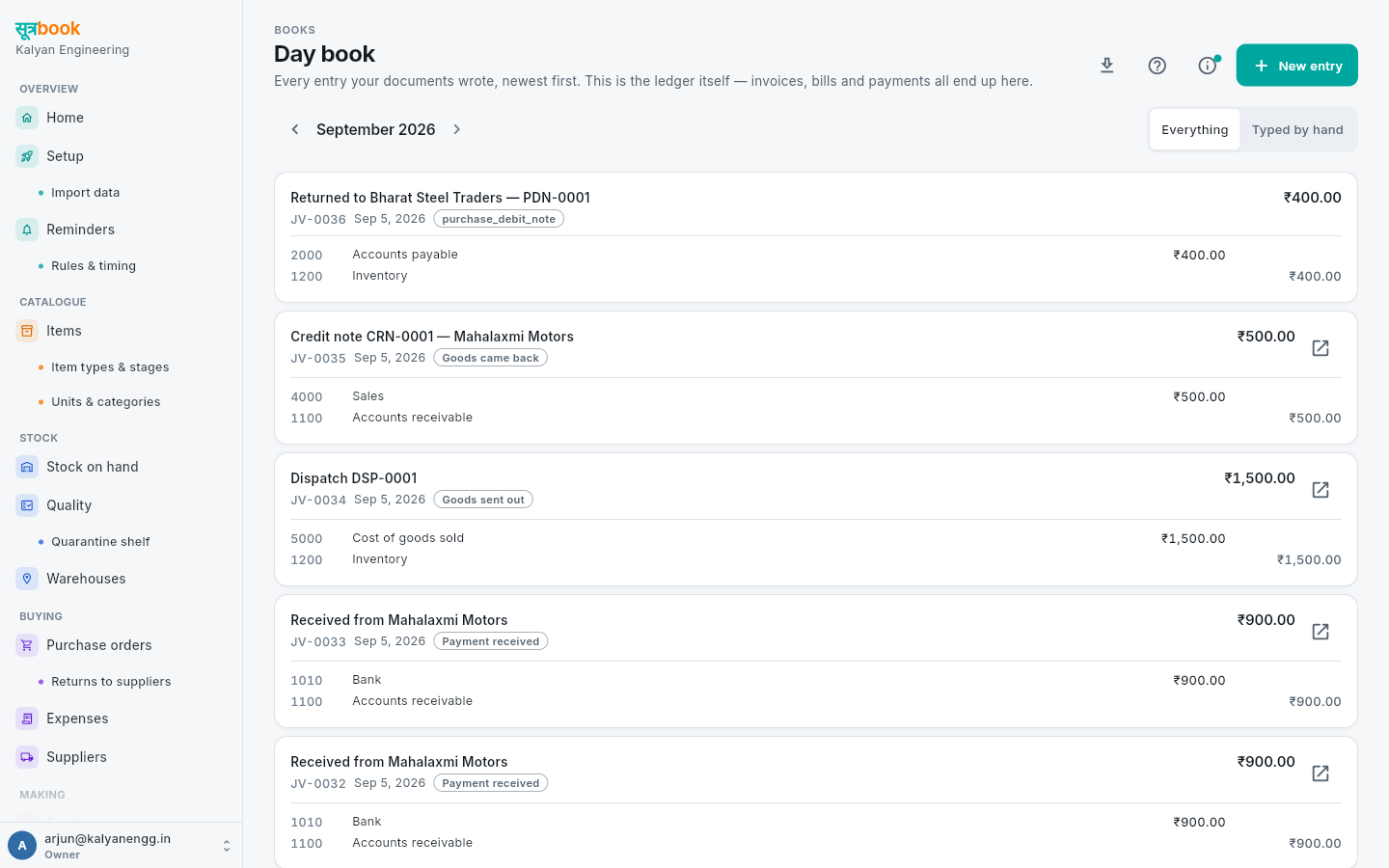
Every entry your documents wrote, newest first. Each line links to the document behind it.
The Tuesday it gets opened
An entry looks odd and needs its document. Rent must be recorded and no document writes it. The bank asks for a P&L.
The old way, stated fairly
The books live at the CA’s office, written from carbons at month end. An odd entry means a phone call and a wait.
How it earns its place
Documents write the books
Every receipt, bill and payment posts its own entry the moment it happens. Tap a line, see the paper.
Nothing is ever erased
A wrong entry is reversed — both stay, linked. An audit trail you can rewrite is not one.
Reports are the books, arranged
P&L, ageing, stock value, trial balance — groupings of entries that already exist. Nothing is typed.
The day book reads "Failed the check — rust · ₹690" — tap it, the inspection opens. Above it, the morning’s delivery: inventory up, Bharat Steel owed. Written by the receipt itself.
What it refuses, and why
Software that explains its “no” is software an owner can trust.
Editing any entry
Corrections reverse; both stay, linked both ways. History keeps meaning what it meant.
An unbalanced voucher
Debits must equal credits at the moment of writing — a money-losing bug fails beside its cause, not in March.
Opening figures into working accounts
Tax, stock and customer dues each have their own honest door — nothing gets counted twice.
Connected on the thread
Nothing here stands alone — the same entry feeds these too.
See it with your own material
Bring the Excel you already keep — the import wizard reads it as it is.