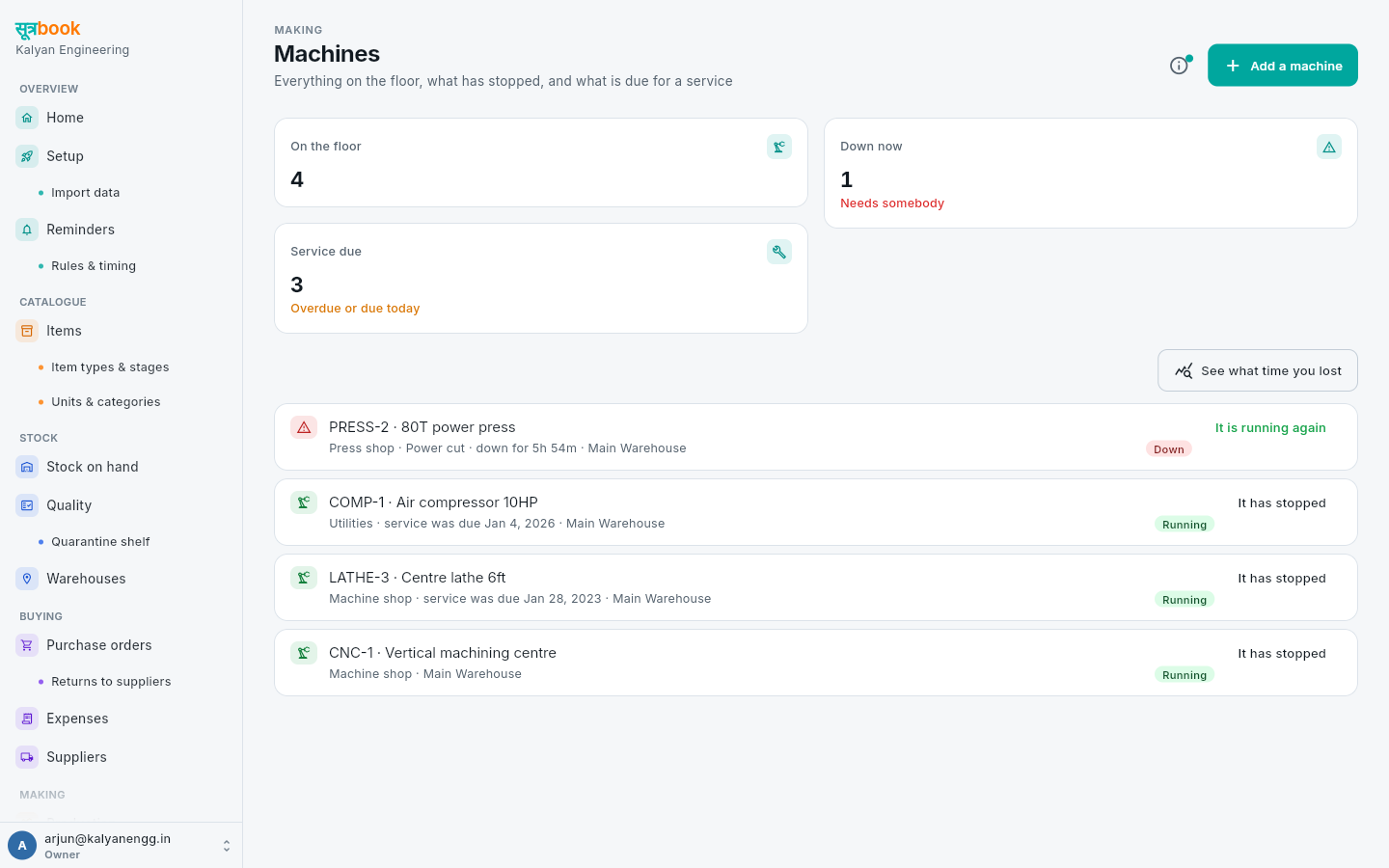
Which machine is down right now?
The floor’s register: what stopped, when, and why — in hours, from a log the floor itself writes.
The Tuesday it gets opened
PRESS-2 stops at 10:40. The person standing at it knows; nobody else does. At month end: how much time did the floor lose, and to what?
The old way, stated fairly
The operator tells the supervisor, who means to tell the owner. Downtime lives in memory; service dates on a wall calendar that turned over in January.
How it earns its place
The floor reports, not the office
"It stopped / it’s running" is a floor permission. A breakdown log only a manager may write is a log nobody writes.
Hours, honestly
A stoppage is a period, not a status. An open breakdown counts up to now — the press down three days is the most important row.
Repairs use the money door that exists
A repair is an expense naming the machine. "What has the compressor cost us?" is a sum.
PRESS-2 stops at 10:40 — power cut. Running again at 13:10: 2½ hours in the log, written by the operator standing there. The month says 40 hours lost — and that 30 were the service somebody booked.
What it refuses, and why
Software that explains its “no” is software an owner can trust.
Logging a machine down twice
The second tap is usually the same stoppage — the refusal answers with "since when".
Retiring a machine still down
Its breakdown would stay open forever, and every figure derived from it with it.
Deleting a machine with history
It still ran the job that made the part that failed. Retire it — out of every list, history intact.
Connected on the thread
Nothing here stands alone — the same entry feeds these too.
See it with your own material
Bring the Excel you already keep — the import wizard reads it as it is.