We sent bad material back — where did the money go?
One document, three effects: the stock leaves, what you owe drops, the GST credit goes back.
The Tuesday it gets opened
Part of a delivery failed at the gate. The supplier billed a wrong rate. They replaced the rejects and the credit has to come back.
The old way, stated fairly
The material goes back on a lorry with a chit, the supplier "adjusts it in the next bill" — and three months later nobody can say whether it ever happened.
How it earns its place
One document, three effects
Stock out, payable down, GST credit given back — nobody has to remember the second and third.
Starts where the problem was found
From the delivery, or straight from the reject shelf — with the failed quantities already filled in.
The taxes follow by themselves
The reversal lands in GSTR-3B as credit given back. It never pollutes GSTR-1, because a return is not a sale.
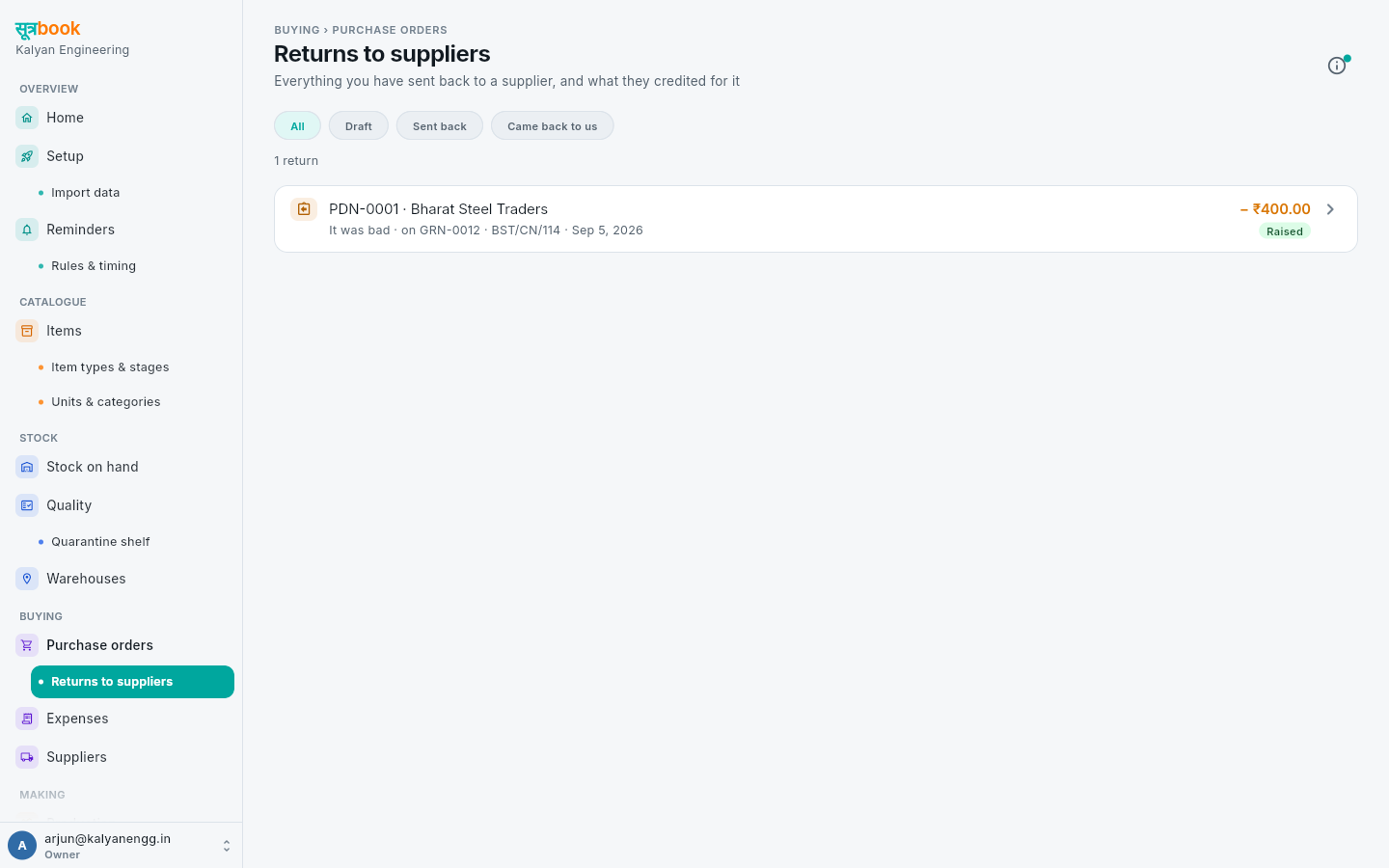
Eight of fifty plates failed the check for rust. Open the return from the reject shelf — the eight are filled in. Issue it: stock out, Bharat Steel owed that much less, and the GST credit given back. The 3B picks it up by itself.
What it refuses, and why
Software that explains its “no” is software an owner can trust.
Returning more than arrived
Counted across every note on that delivery — three people chasing one bad lot can’t credit twelve of ten.
A quality return with nothing moving
Nothing moving means it was a rate difference — which is its own reason, honestly named.
Editing after issue
A wrong note is cancelled — which reverses it honestly — and a fresh one made.
Connected on the thread
Nothing here stands alone — the same entry feeds these too.
See it with your own material
Bring the Excel you already keep — the import wizard reads it as it is.