What have we promised — and what can go on the van?
Confirming is a promise. Stock moves only when a dispatch says goods went out.
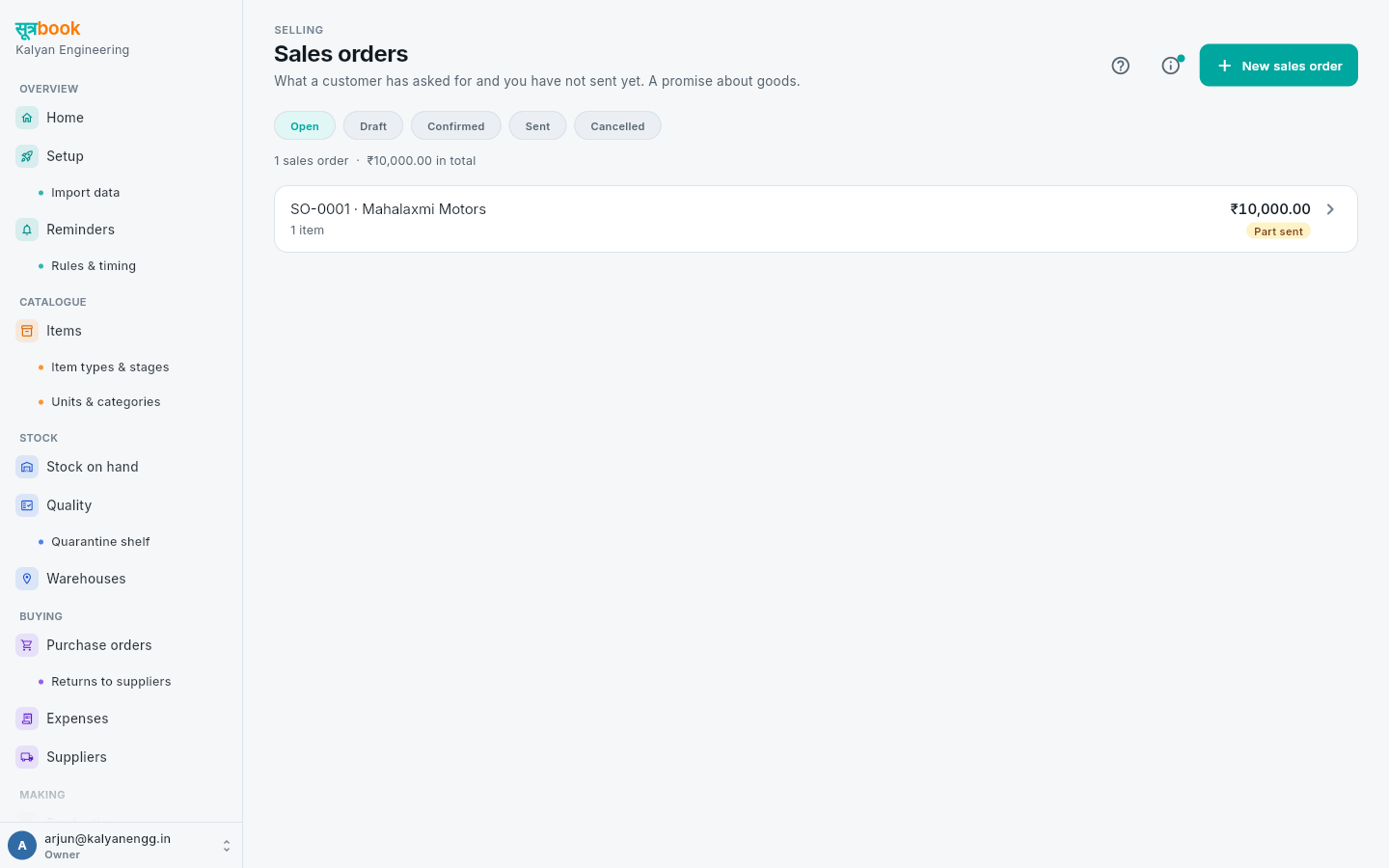
The Tuesday it gets opened
A customer confirms 500 brackets on the phone. Three weeks and four partial loads later — how many are still owed?
The old way, stated fairly
The order lives in a notebook or a WhatsApp screenshot. It works until the second partial dispatch, when "how much is left?" takes a phone call and an argument.
How it earns its place
A promise is not a movement
Confirming touches no stock. Goods move when a dispatch says they went on a van.
The line shows what can load
300 made but 200 packed shows 200 — the count for that stage, not the item’s flattering total.
A shortage is stated, never blocked
Small factories write the paperwork after the van leaves. Software that blocks that teaches people to lie to it.
Mahalaxmi orders 100 brackets. 200 are made, 150 packed — the line shows what can load. Dispatch 60: the order reads "part sent", and 40 stay owed. Nobody counts on their fingers.
What it refuses, and why
Software that explains its “no” is software an owner can trust.
Editing a confirmed order
The customer has been told. A change is a new conversation, not a quiet rewrite.
Dispatching more than ordered
The extra needs its own order — not a quiet overshoot.
Cancelling a dispatched order
The stock movement would point at a document claiming nothing happened.
Connected on the thread
Nothing here stands alone — the same entry feeds these too.
See it with your own material
Bring the Excel you already keep — the import wizard reads it as it is.