Where is the stock — whose shed?
Every movement names a godown, so "how much" always comes with "where".
The Tuesday it gets opened
A new shed starts holding stock. Somebody asks what is in godown B. Material moves between floors.
The old way, stated fairly
One stock register for the whole factory — so "how much" sometimes has an answer, but "where" never does. The shed across the road is in nobody’s books.
How it earns its place
"How much" comes with "where"
Every movement names its godown. A transfer is two linked movements — nothing vanishes in between.
Some shelves are the software’s own
The quarantine shelf and a job worker’s shed hold your stock in your valuation — but off every picker, so it can’t be sold by mistake.
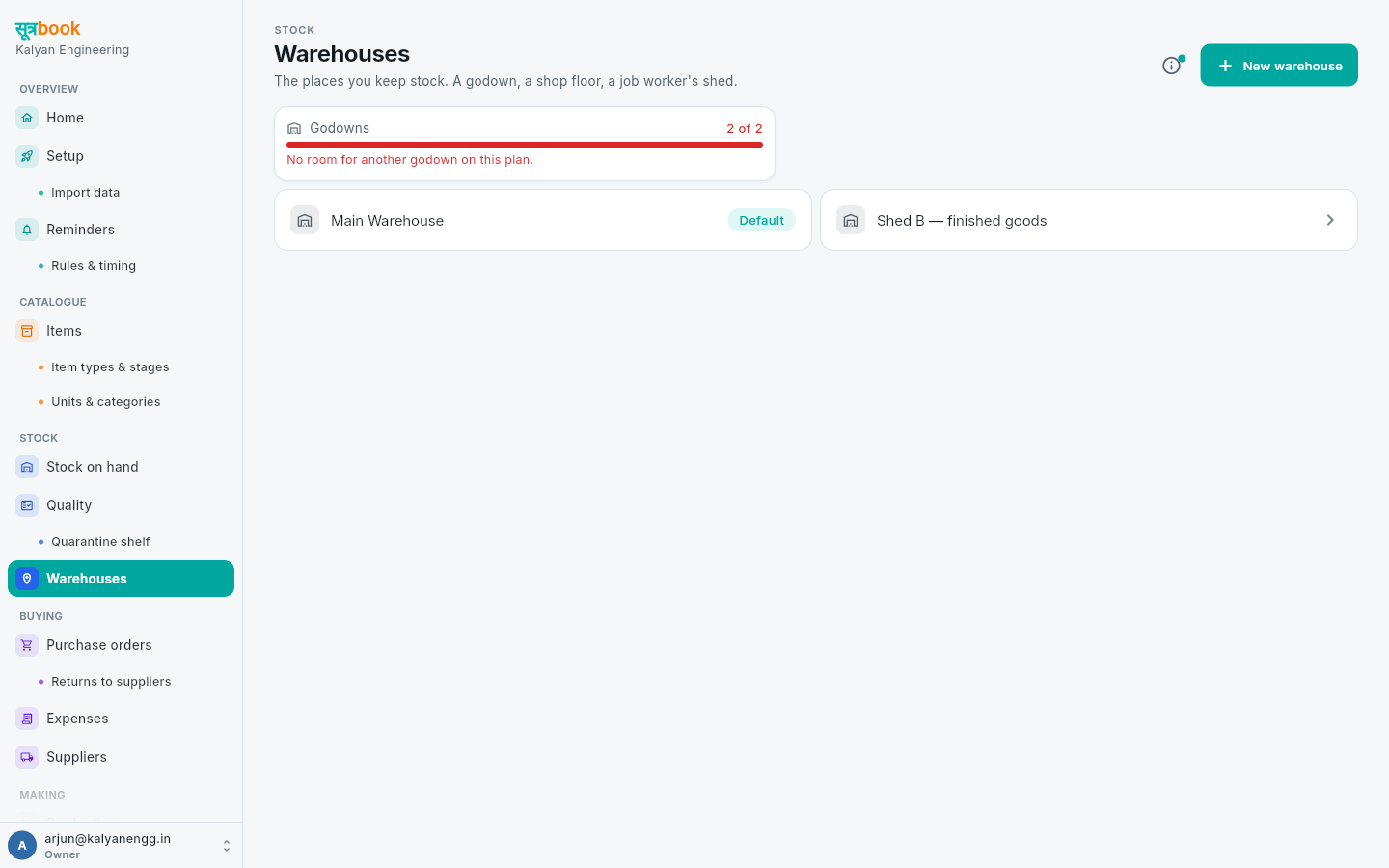
The cap is visible before it refuses
The plan’s godown count sits above the list — a refusal is never the first you hear of it.
Main Warehouse holds raw material; Shed B holds what’s ready to go. A transfer writes two linked movements, and each godown’s page shows exactly what it holds today.
What it refuses, and why
Software that explains its “no” is software an owner can trust.
Archiving a godown with history
Its past movements would point at a hole. The default godown is protected the same way.
Selling from quarantine or a job worker’s shed
Counted in your stock, never offered on a picker — and never counted against your plan.
Connected on the thread
Nothing here stands alone — the same entry feeds these too.
See it with your own material
Bring the Excel you already keep — the import wizard reads it as it is.