What did we make — and what did it eat?
A run eats materials and makes product in one entry. Nothing appears from thin air.
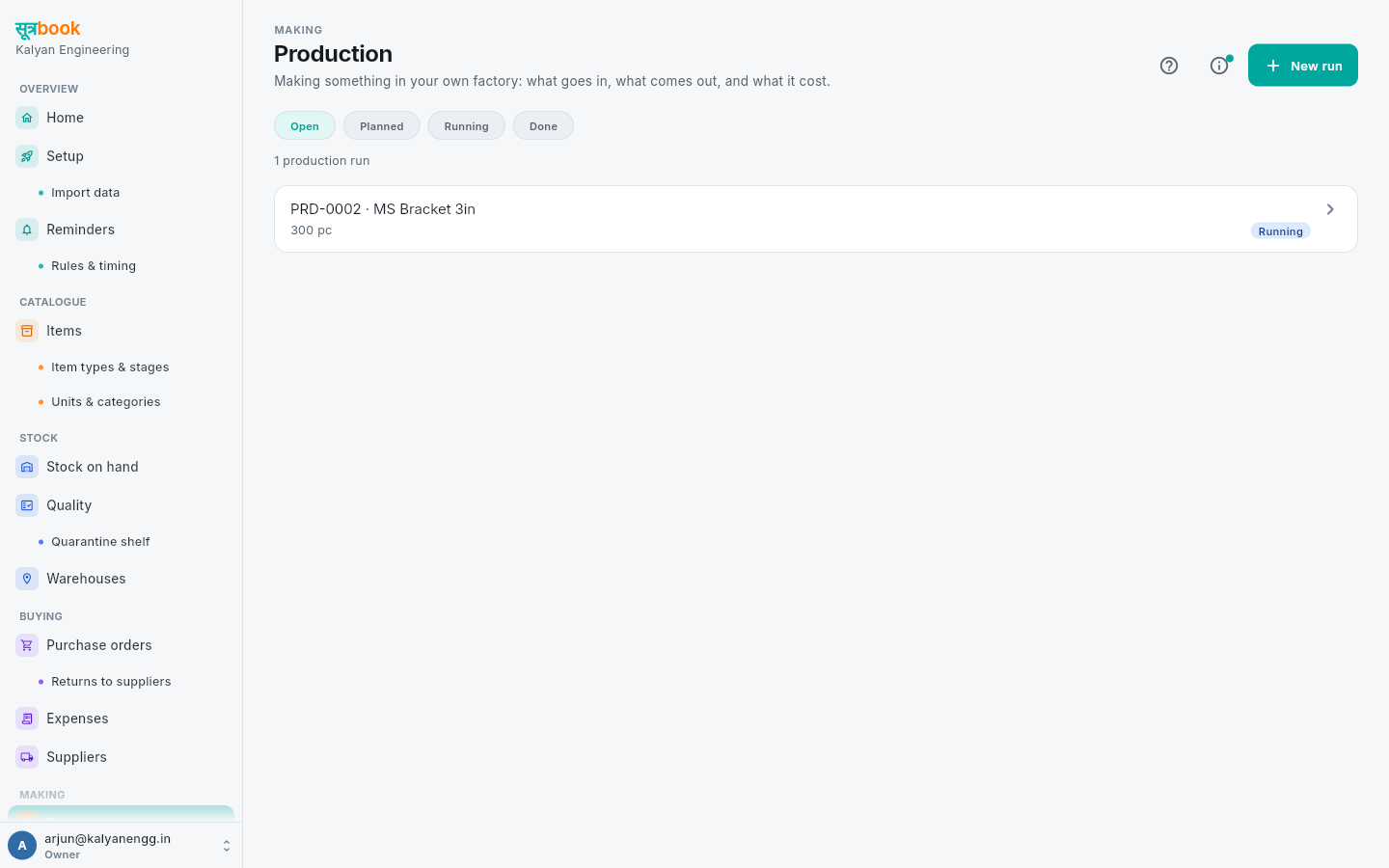
The Tuesday it gets opened
A batch of 300 is planned and somebody needs to know the material is there before the line starts. A run finishes and what was made must reach the shelf.
The old way, stated fairly
The recipe lives in the supervisor’s head, consumption in a rough book. Ask what last month’s batch cost and three people give three answers.
How it earns its place
The recipe already knows
A new run asks the product and how many. Materials scale from the item’s own recipe — nobody re-types them.
Shortages counted before you start
Stock sits beside every requirement. Stated, never blocked — the floor decides.
History can’t be rewritten
The recipe is snapshotted onto the run. Edit it next month; last month’s runs still say what they consumed.
Make 300 brackets. The recipe scales itself: 150 kg of plate needed, on-hand beside it. Complete the run and one entry takes the plate out and puts the brackets in — at what they actually cost.
What it refuses, and why
Software that explains its “no” is software an owner can trust.
A run with no recipe
It would consume nothing and make product from thin air.
Scrap as the whole output
A run that made nothing is a failed run — and scrap names a defect, because "damage" can’t say the die drifted.
Cancelling a completed run
It already moved stock. The correction is a document, not an undo.
Connected on the thread
Nothing here stands alone — the same entry feeds these too.
See it with your own material
Bring the Excel you already keep — the import wizard reads it as it is.