Where does the small money go?
The chai, the mechanic, the diesel — recorded the day they happen, in your accountant’s own categories.
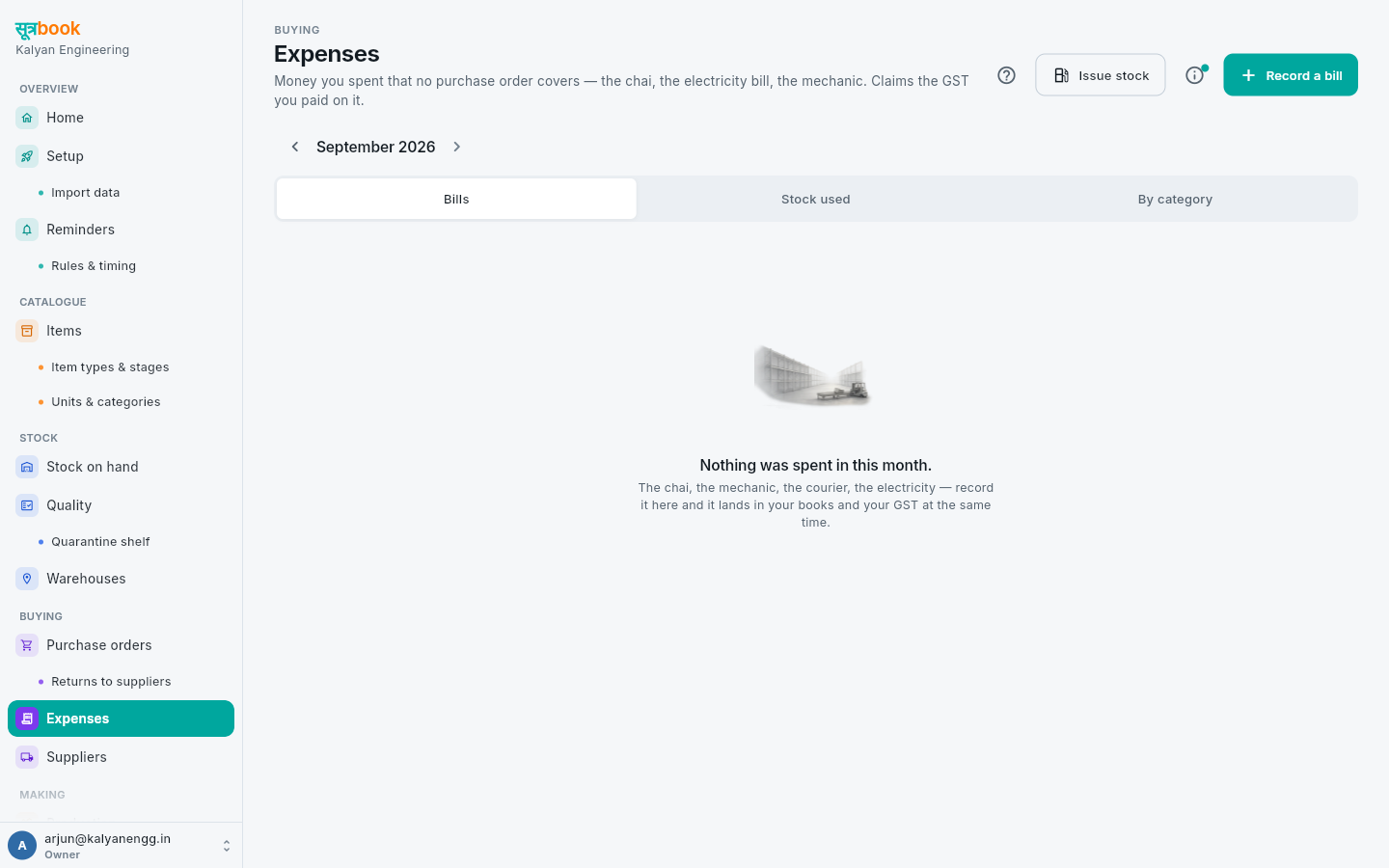
The Tuesday it gets opened
A bill lands that no purchase order covers. The generator needs diesel from the store. Month end — what did "repairs" cost this year?
The old way, stated fairly
A drawer of small bills, entered in one lump at month end — or never. The diesel is the worst: bought at two prices, burned from one tank, costed by whoever’s memory is loudest.
How it earns its place
A bill and an issue are different things
Chai and the mechanic are bills at face value. Diesel was stock — and an issue costs exactly what the ledger carried it at.
Categories are real accounts
Nine seeded, add your own. The month-end summary is books, not a shoebox.
A repair names its machine
"What has this lathe cost us?" becomes a sum, not a memory.
The generator burned 120 litres bought partly at ₹90 and partly at ₹95. Issue them from stock: they cost what the ledger carried them at — ₹10,980. The same answer, whoever asks.
What it refuses, and why
Software that explains its “no” is software an owner can trust.
Typing the value of a stock issue
It is read from the stock ledger — the same diesel cannot cost two amounts depending on who was asked.
Issuing more than the store holds
The tank cannot give what it does not have; neither can the ledger.
An expense with no category
Money nobody names is money nobody finds again.
Connected on the thread
Nothing here stands alone — the same entry feeds these too.
See it with your own material
Bring the Excel you already keep — the import wizard reads it as it is.