What did we order — and what actually came?
One document that remembers. You owe for what arrived, not what you ordered.
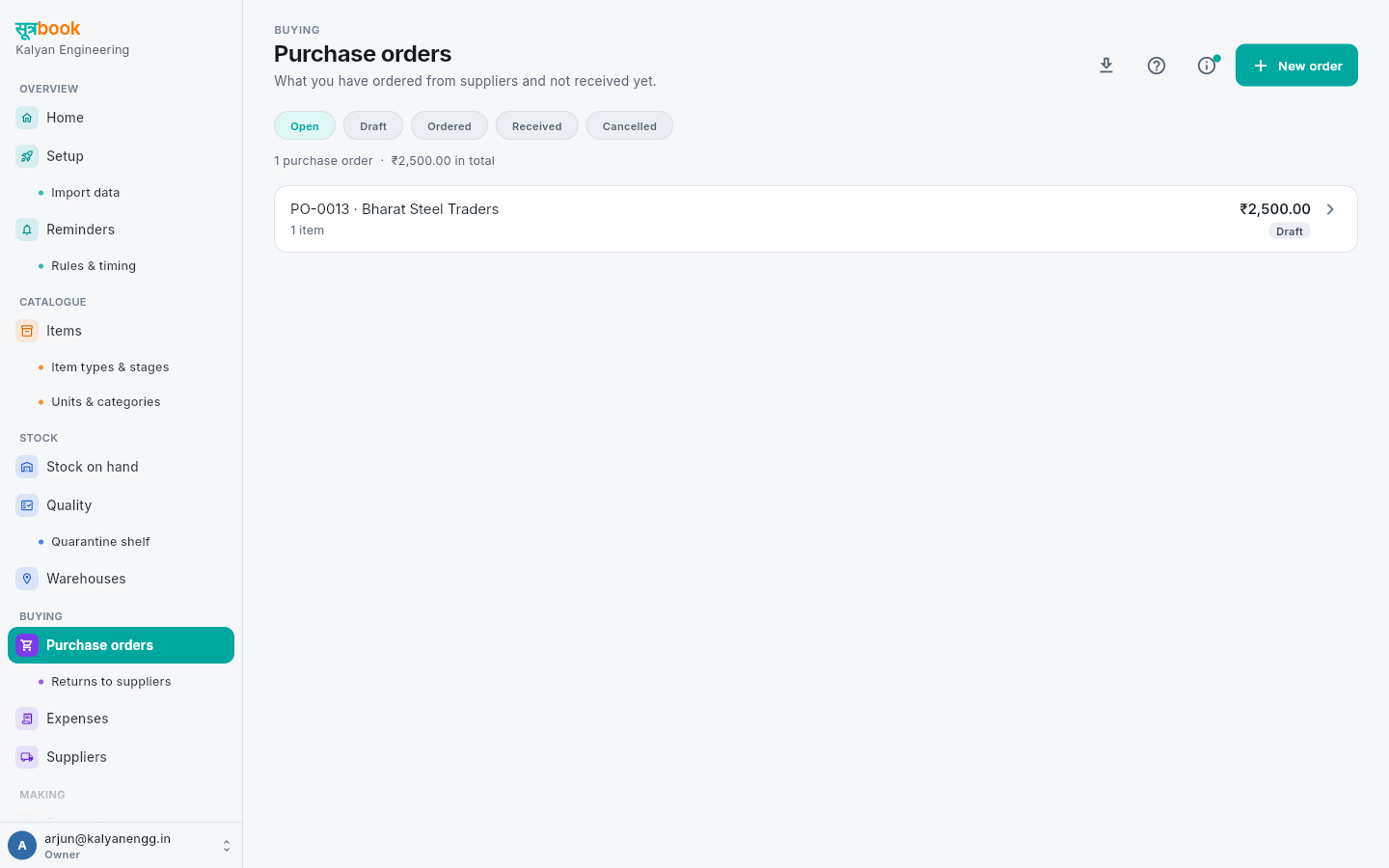
The Tuesday it gets opened
Material runs low. A lorry is at the gate. The supplier’s bill arrives and somebody has to check it against what actually came.
The old way, stated fairly
The order is a phone call, the delivery is a chit, and the bill is checked against memory. When 400 of 1,000 kg arrive, somebody has to remember the 600 still coming.
How it earns its place
The order remembers
Deliveries land against it — 400 kg today, 600 next week. The status works itself out; nobody sets it.
Debt starts at the gate
What you owe is received × rate, minus payments. Ordering creates no debt; receiving does.
Stock and cost move together
The godown rises and the running average updates the moment goods are marked in.
Order 1,000 kg of MS Plate at ₹50. The lorry brings 400 — mark them in. The order reads "partially received", the godown shows +400 kg, and you owe ₹20,000, not ₹50,000.
What it refuses, and why
Software that explains its “no” is software an owner can trust.
Receiving against a draft
Send the order first — so what arrives is checked against what was actually asked for.
Receiving more than was ordered
The extra needs its own order, not a quiet overshoot nobody approved.
Paying an order nothing arrived on
Money before goods is an advance — a different thing, recorded on the supplier where it stays visible.
Connected on the thread
Nothing here stands alone — the same entry feeds these too.
See it with your own material
Bring the Excel you already keep — the import wizard reads it as it is.